Rencontres Internationales Paris/Berlin

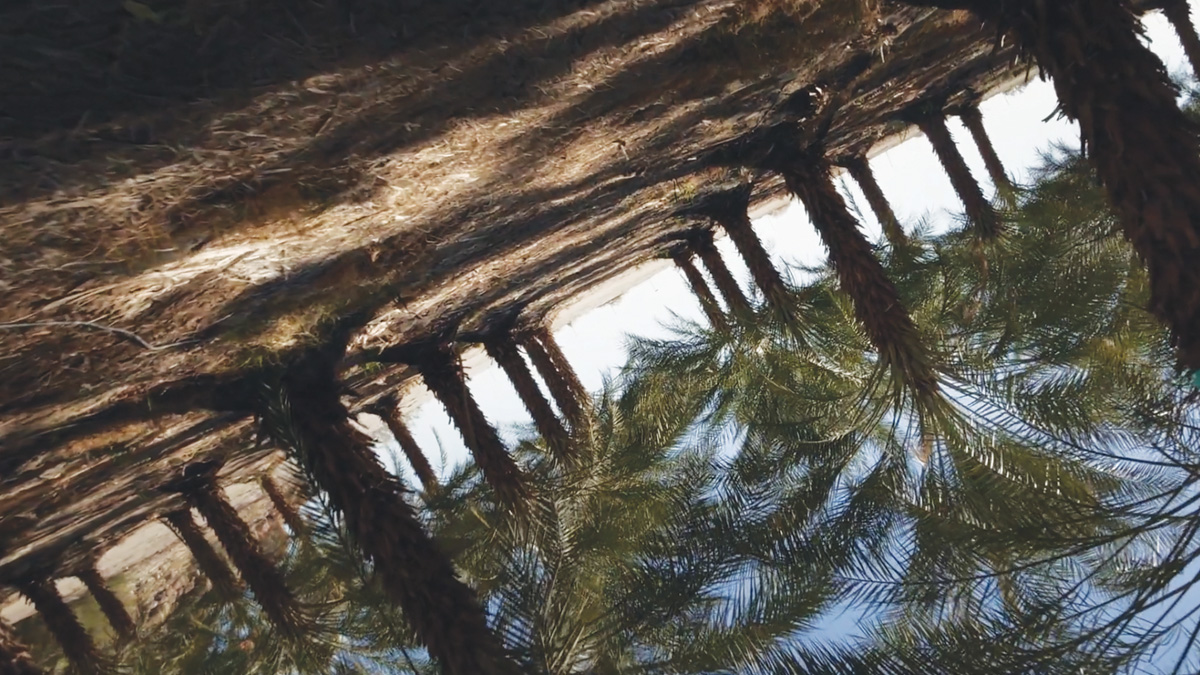
Image from “Valley Pride” by Lukas Marxt. Courtesy of the artist.

On the 6th and 7th of March 2026, the Nicosia Municipal Arts Centre, associated with the Pierides Foundation [NiMAC], in collaboration with the Institut Français Cyprus, are organizing  two screening sessions and a workshop, proposed and presented by the curators of the Rencontres Internationales Paris/Berlin, the latest edition of which was held in Paris last November, notably at the Jeu de Paume national museum and the Maison Européenne de la Photographie.

The screening sessions will take place at Theatro Polis and will bring together a selection of short and medium-length works by visual artists – combining documentary approaches, experimental fiction and hybrid forms – in dialogue with the themes of the exhibition Fluid Persistence, currently on display at NiMAC. In resonance with the exhibition, the workshop will be an opportunity to explore the theme of hybrid spaces.

Friday, 6 March 2026 | 18:30 – 20:30

“Critical Zone”

The screening will be followed by a Q&A with the curators

Minne Kersten: The Same Room | Video | 4k | colour | 0:06:43 | Netherlands | 2023

Synopsis

The Same Room investigates the dual nature of water, both as a destructive and life-giving force. In collaboration with the Deltares Institute, Minne Kersten recorded a self-made filmset of a bedroom in an industrial wave-tank, where it was deliberately flooded with water over three successive days. By inverting the use of the institute’s controlled environment originally intended to prevent flooding, she questions the human desire to control the course of nature. Furthermore, Kersten is interested in the state of paralysis and tranquility that can occur upon a catastrophe, opening up a space for thinking about the end as a transitional state rather than something final. By combining the personal space of a bedroom with the horrors of a flood, the work creates a powerful and emotional image that wavers between clarity and chaos.

Biography

Minne Kersten is a Dutch artist, she lives and works between Amsterdam and Paris. She works on installation, video and paintings in which ephemeral occurrences and the construction of reality is explored. Through her architectural environments, she speculates on how buildings can be receptive to stories and traumas by staging situations subjected to chaos, decay and deconstruction. She explores the traces of events left behind and questions them as witnesses to private stories retained by the walls that surround human life. Working across diverse media, she interweaves personal themes such as mourning, loss and memory with the collective domain of fiction, fables and symbols.

Her work has been presented in numerous institutions including the CAPC Bordeaux 2024, Glasgow International 2024, Bonnefanten Museum 2023, 16th Lyon Biennale 2022, Stedelijk Museum Schiedam 2022, the Living Art Museum 2022, De Ateliers 2022, Hotel Maria Kapel 2021, among others. In 2022, she won the Volkskrant Visual Arts Audience Award and was nominated for the Royal Award of Modern Painting. She has been selected for residencies at De Ateliers 2018-2020, Triangle Astérides 2023 and Cité Internationale Des Arts 2024. She is represented by Annet Gelink Gallery in Amsterdam.

Lukas Marxt: Valley Pride | Video | 4k | colour | 0:12:51 | Austria, USA | 2023

Synopsis

The seemingly extraterrestrial camera eye floats upside down through a palm grove planted in a strictly rectilinear manner. Nature is literally upside down and existing in an artificial order as a business game. Only at the crescendo of the strange, vibrantly smoldering soundtrack by Jung an Tagen does the gaze slowly turn clockwise. Then, cut: quietness, open space. 

At some point the logo “Valley Pride” can be read in the middle of the California desert, on oversized corrugated iron sheets, designating one of the most important commercial areas of US industrial agriculture. It’s an inhospitable place, whose increasingly bizarre unnaturalness is conveyed through Lukas Marxt’s unmistakable approach. Visually stunning, the monocultural agrarian symmetry and its ballet of irrigation testify to man’s self-extinction in the service of constant profit orientation – even if the necessarily anonymous workers return to the picture in this, Marxt’s fourth visual examination of the Imperial Valley. Under the sword of Damocles of unclear residence status and a US immigration policy that ranges from rigid to ignorant, the personal destinies and stories behind them must remain untold. The people are the smallest cog in the wheel of work in the gigantic agricultural machine trimmed for optimization, as it buries ecological and ethical standards under the relentless shoveling and plowing equipment. In front of endless rock formations and dancing mirages caused by the heat, they fertilize, harvest, and pack lettuce in a quasi-automated routine. In near-astonishment, the camera eye observes this hustle and bustle as it occurs in a leafy place where no greenery was intended. This is a place where fertility and death collide mercilessly and the threatening catastrophe – social, economic, ecological – is inscribed in every image, no matter how innocent. Here, beauty meets decay and exploitation as a man-made dystopia. That, too, is Valley Pride – a pride with an expiration date. (Sebastian Höglinger) 

Biography

Lukas Marxt is an Austrian artist and a filmmaker living and working between Cologne and Graz. Marxt´s interest in the dialogue between human and geological existence, and the impact of man upon nature was first explored in his studies of Geography and Environmental Science at the University of Graz, and was further developed through his audio visual studies at the Art University in Linz. He received his MFA from the Academy of Media Arts Cologne, and attended the postgraduate programme at the Academy of Fine Arts Leipzig.

Marxt has been sharing his research in the visual art environment as well as in the cinema context. His works have been featured in numerous solo and group exhibitions, most recently at the Torrance Art Museum (Los Angeles, 2018), at The Biennial of Painting, Museum Dhondt-Dhaenens (Belgium, 2018), and at the Museum of Modern and Contemporary Art Rijeka (Croatia, 2018). His films have been presented in numerous International Film Festivals including Berlinale (Germany, 2017 and 2018), Curtas Vila do Conde (Portugal, 2018), and the Gijón International Film Festival where he receiced the Principado de Asturias prize for the best short film (Spain, 2018).

Since 2017, Marxt has spent a considerable amount of time in Southern California, where he has researched the ecological and socio-political structures surrounding the Salton Sea.

Sonia Levy: We Marry You, O Sea, as a Sign of  True and Perpetual Dominion | Exp. documentary | 4k | colour | 0:19:28 | France, Italy | 2025

Synopsis

“We Marry You, O Sea” engages with Venice and its lagoon “from below,” with the aim of focusing attention on the city’s submerged, life-giving, and altered bio-geomorphological processes rather than on its often-recounted political and military histories. Underwater filmmaking opens new ways of knowing the materialities of the Venice Lagoon and exposes a fractured and troubled environment that complicates mainstream historical narratives that start above the water’s surface. By attuning to the ebb and flood of the lagoon, we start sensing the interplay between land and water, life and decay, and the intimate processes shaping this environment. Noticing the kinds of life made possible in this damaged watery space compels us to delve into the ways it has been profoundly transformed.

In the lagoon, a space requiring continuous modifications for human settlement, wetlands and infrastructures have long been intertwined. Venice’s consolidation as a trading hub and epicenter of naval advancement during the Middle Ages prompted major hydrological engineering to maintain the lagoon’s shallow depths for defense purposes. However, in the twentieth century, harrowing modernization transformed parts of the wetland into petroleum refineries and one of Italy’s largest container terminals as part of an effort to turn the lagoon into an industrial frontier. Urban anthropologist Clara Zanardi has described how these transformations spatialized class divisions in a new way, while also causing irreversible ecological degradation that has profoundly altered the lagoon’s lifeways.

The film presents these histories of modernization by interweaving rare historical photographs from Venice’s Giacomelli Photographic Archive with submerged perspectives of the present conditions of the lagoon. The historical significance of these photographs is emphasized by the negative black-and-white reversal of the submerged perspectives, connecting past and present and unfolding futures within the lagoon’s contaminated waters. An original score, created by a chorus of human voices and underwater sound recordings, further emphasizes the links between submerged spaces and human domains. The composition captures the lagoon’s pulses and the impact of industries—from aquatic sounds drowned out by boat noises to the rhythmic poundings of industrial activity amid surging tides—as it gestures toward the profound interplay between human activities and the lagoon’s shallows.

Biography

Sonia Levy is a French artist filmmaker. Her work, marked by site-specific and interdisciplinary inquiries, delves into the implications of Western expansionist and extractive logics, exploring how these forces manifest in the transformation and governance of hydrosocial worlds. 

Her practice aims to probe the thresholds that have shaped and influenced the conditions necessary for life to flourish. She was the 2023-24 European Marine Board artist-in-residence, contributing to the UN Ocean Decade, and the 2022 S+T+ARTS4Water resident with TBA21–Academy in Venice. Levy’s work has been screened and exhibited internationally, including Tate Modern; Radius CCA; Arnolfini; Macalline Center of Art; Somerset House; Ocean Space; Museo Thyssen, Museo CA2M, ICA London, ZKM Karlsruhe, MarinMOCA, Muséum d’Histoire Naturelle, Paris; BALTIC, Gateshead;  The Showroom, London; ZKM Karlsruhe, Art Laboratory Berlin; HDKV, Heidelberg; Futura/Karlin Studios; Verksmiðjan á Hjalteyri, Iceland; and The Húsavík Whale Museum, Iceland. 

Her work has been published by MIT Press, Thames & Hudson, Antennae Journal, The Learned Pig, Billebaude, Verdure Engraved, and has appeared in NatureCulture and Parallax journals. She presented her research at Goldsmiths, University of London; the University of Exeter, TU Delft; NYU Gallatin; The University of California, Santa Cruz; Harvard Graduate School of Design, Cambridge MA; The Iceland Academy of the Arts; The Oslo School of Environmental Humanities, Trondheim Academy of Fine Art, and AURA: Aarhus University Research on the Anthropocene. 

She is an Associate Lecturer at the Royal College of Art, School of Architecture and the co-convenor of the collective Howlikeareef. Additionally, she is a member of the Steering Committee at the UN Ocean Decade Coordination Office on Connecting People and the Ocean. Furthermore, she is an external member of the Centre for Critical Global Change at Goldsmiths, University of London. Currently, she is a guest researcher at THE NEW INSTITUTE Centre for Environmental Humanities (NICHE), Ca’ Foscari University.  

Jan Locus, Stijn Demeulenaere: Murmur | Video | 4k | black and white | 0:10:21 | Belgium | 2019

Synopsis

Brussels was built on a swamp. Today, only one tiny part of Brussels is still officially a swamp. Although continually threatened by development the area stayed intact, largely due to being ensnared between two railroad tracks. Further enclosed by high-rise social housing and industrial areas just behind these railroads, the swamp is a mix of damp prairies and patches of bushes and trees. It’s home to a lot of small wildlife such as birds, rodents, bats, amphibians and even ringed snakes. A small green oasis, in the middle of a concrete landscape.

Murmur is a collaboration between film maker Jan Locus and sound artist Stijn Demeulenaere.  Just before first light, Jan and Stijn recorded the dawn chorus at the swamp. The city drone permeates the sound of the swamp, and a strange mix enfolds between the sound of an awakening nature and a human presence. Urban drone and bird song merge into an (un)familiar murmur presence in the twilight hour of the morning.

Biography

Jan Locus lives and works in Brussels. Spanning the mediums of film, photography, and sound, his work often addresses landscape as a tool for the creation of national and social identities, focusing on environments altered by extraction and industrialization. In his latest work, he explores the tension between found footage, still photography, and the moving image, emphasizing the ambiguity of our perception of reality and fiction.

His films have been presented at numerous international festivals, including the International Film Festival Rotterdam (IFFR), the International Short Film Festival Oberhausen, Rencontres Internationales Paris/Berlin, Le FIFA – International Festival of Films on Art (Montreal), Kasseler Dokfest, Asolo Art Film Festival, Stuttgarter Filmwinter, CROSSROADS Film Festival (San Francisco), ANTIMATTER Media Art (Victoria), Festival ECRÃ (Rio de Janeiro), PROYECTOR Plataforma de Videoarte (Madrid), SPLIT Film Festival, ONION CITY Experimental Film Festival (Chicago), BISFF Beijing International Short Film Festival, and Flight / Mostra Internazionale del Cinema di Genova among others.

Stijn Demeulenaere lives and works in Brussels, he is sound artist and field recordist. He creates installations, soundscapes, performances, and does sound design for dance and theatre. Stijn researches the relationship between identity, sound and listening. His work was shown at, among others, Concertgebouw Bruges, NIMk (NL), Den Frie (DK), STUK (BE), Kaaitheater (BE), New adventures in Sound Art (CA), and IFFR Rotterdam. His work was nominated for the LOOP Discovery Award, the European Sound Art Award, and it won prizes at the Engine Room International Sound Art Award and the Musica Soundscape Award.

Jasper Coppes: Aasivissuit | Exp. documentary | 4k, super 16mm, hdv | colour | 0:23:30 | Netherlands, Greenland | 2020

Synopsis

Recent footage of melting polar ice in Greenland as shown in the global mass media has represented the country as both the ground zero of climate crisis and a vast expanse for resource exploitation. The film Aasivissuit aims to provide a different view, showing instead the landscape and its inhabitants: focusing on people’s discussions about climate change and how they adapt in their complex relationship with the changing environment.

The film follows two park rangers exploring the Greenlandic landscape. They exchange new and old knowledge of the land in their conversations. They talk about how ancient fertile sediment from Greenland is used to nurture exploited soil elsewhere and how microbes have found a way to deal with pollution. Drawing attention to the non-human presence within the landscape, the camera occasionally adopts the perspective of a fly or a raven, or dives into one of the holes in the melting ice cap where toxic metals collect. The film investigates how we can experience and perhaps understand these different perspectives.

“The film Aasivissuit is the outcome of four years of exchange and collaboration with various Greenlandic nature experts and scientists who intimately know this stunning landscape. Their perspectives, as well as those of other-than-human inhabitants such as the raven or the microbe, formed the blueprint of the film. Rather than focussing on their environment from a human centered angle, our aim was to represent the sunlit grasslands of Assivissuit between Polar sea and melting inland ice sheet, from the point of view of the landscape itself – showing how entangled our relations are.”

Biography

Jasper Coppes is an artist from Netherlands, based in Amsterdam. His practice takes shape across a variety of different media, such as; film, writing, sculpture, architecture and sound. With his work, he questions the dominant stories we tell about landscapes and the processes that take place within them. Long-term dialogues with specific sites, people and other entities form the basis of his practice. Recent exhibitions: 2020 ´Exploded View´ Zone2Source (NL), 2019 Museum Nacht Scheepvaart Museum (NL), 2018 ´Cabinet Interventions’ Glasgow International Festival (UK), 2017 Glasgow Short Film Festival (UK), 2015 ´Roineabhal´ Galerie van Gelder (NL) Coppes is a tutor at the Royal Academy of Art in The Hague, MA Artistic Research and at the Gerrit Rietveld Academy in Amsterdam.

Minne Kersten floods a room for three days, questioning humankind’s desire to control the course of nature. Lukas Marxt investigates Valley Pride, a region of industrial agriculture in California’s Sonoran Desert. Within this gigantism, designed for optimisation and the sole pursuit of profit, fertility and death collide under the looming threat of catastrophe—social, economic, ecological. Sonia Levy explores the Venice lagoon, which was kept shallow in the Middle Ages for defensive reasons and then transformed into an industrial frontier. Jan Locus and Stijn Demeulenaere observe Brussels’ last remaining natural marshland at night, enclosed between buildings and railway tracks. In this marsh, the sounds of the ecosystem mingle with the first signs of human activity. Jasper Coppes explores landscapes in Greenland and follows the discussions of its inhabitants on climate change and how they adapt to this changing environment.

Saturday 7 March | 16:00 – 18:00

Discussion workshop “Hybrid spaces, critical spaces”

Presented by the two curators of the Rencontres Internationales Paris/Berlin, Nathalie Hénon and Jean-François Rettig, the workshop offers a temporary and informal discussion on the notions of hybrid spaces and critical spaces in the field of moving images.

Limited number of participants.
Registration on https://tinyurl.com/workshop-07-03-2026
18:00 – 18:30 Coffee Break

18:30 – 20:30

“Shores”

The screening will be followed by a Q&A with the curators

Arjuna Neuman, Denise Ferreira da Silva: 4 Waters / Deep Implicancy | Exp. documentary | hdv | colour | 0:29:00 | United Kingdom, Chile | 2018

Synopsis

“4 Waters – Deep Implicancy” is as much a film project and an experiment in collaboration as it is a set of fragments drawn from a reimagined cosmos.

These fragments, sounds, and stories help us convey the experiential moment of entanglement, or rather, they describe an entangled moment prior to separation, what we call “Deep Implicancy”.

One such story we follow is water, both as it phase transitions with and into other matter including life, but also as it combines disparate geographies, bodies of/in water, and four islands within them – Lesvos, Haiti, Marshall Islands, Tiwi.

Through a series of experimental migrations and elemental crossings we begin to question the form of the universal human, its calcified and exceptional origins, and in particular its ethical program.

Wandering and wondering through a transformative figuring of justice, we ask, what if our image of the world recalled phase instead of measure? And what becomes of ethics if we let go of value?

Biography

Arjuna Neuman is an artist, filmmaker, and writer and he is the co-founder of archiveofbelonging.org – a resource database for migrants and refugees. Neuman works with the essay as a guiding, multi-perspectival and inherently future-oriented form that underpins his experimental research and creative approach. As a writer he has published essays in Relief Press, The Journal for New Writing, VIA Magazine, Concord, Art Voices, Flaunt, LEAP, Hearings Journal, and e- flux. He studied at California Institute of the Arts.

Denise Ferreira da Silva is an artist and philosopher. She currently is the Samuel Rudin Professor in the Humanities at the Department of Spanish and Portuguese Languages and Literatures, at NYU. Her  artistic and academic work reflect and speculate on questions crucial to contemporary philosophy, political theory, black thought, feminist thought, and historical materialism. She is the author of Toward a Global Idea of Race (2007), Unpayable Debt (2022) amongst many other titles.

Arjuna Neuman and Denise Ferreira da Silva’s collaboration includes the film Serpent Rain (2016), 4 Waters-Deep Implicancy (2018), Soot Breath//Corpus Infinitum (2020), Ancestral Clouds Ancestral Claims (2023). Their films have been exhibited at major art venues such as MACBA (Barcelona); Kunsthalle Wien (Vienna),  the Pompidou Center (Paris), Whitechapel Gallery (London), The 56th Venice Biennale, The Haus Der Kulturen Der Welt (Berlin), Centre for Contemporary Art (Glasgow), and more. In Februrary 2024, they opened a retrospective of their work at the Munch Museum in Oslo; in May 2024 the Kunsthal Extra City in Antwerp opened a solo exhibition of their work.

They have a forthcoming monograph published by Archive Books.

Iván Argote: Le Fond de la Seine | Exp. documentary | 4k | colour | 0:16:16 | France, Colombia | 2023

Synopsis

What would La Seine say to us if she could talk to us? Does it remember everything we’ve dreamed, imagined and said about it? Its luminous passages, its dark corners? All its secrets? Words of love? Sorrows?

Le Fond de la Seine speaks to us in the first person, revealing a poetic portrait of a river charged with life, luminosity, stories and dark spaces. This portrait, created using underwater and landscape images, narrated by a powerful voice and accompanied by a moving soundtrack, builds as the film progresses. From its timid source, the origin of many Paleolithic myths, through gentle, crystalline corners that slowly become a mighty mass of water, industrial road, urban passage and power that finally empties into the ocean, merging heart and soul with all the bodies of water on earth.

Le Fond de la Seine speaks to us in a sensitive way, about the feelings and fantasies we project towards this river we know so well, yet which hides so much from us.

Biography

Iván Argote is a Colombian artist and film director, living and working in Paris. Through his sculptures, installations, films and interventions, he questions our relation with others, with power structures and belief systems. He develops strategies based on tenderness, affect and humour through which he generates critical approaches to dominant historical narratives. In his interventions on monuments, large-scale ephemeral and permanent public artworks, Iván Argote proposes new symbolic and political uses of public space.

Argote studied graphic design, photography and new media at the Universidad Nacional de Colombia in Bogotá and holds an MFA from the École Nationale Supérieure des Beaux-Art (ENSBA) in Paris.

Solo exhibitions include: ‘TO MOVE AND BE MOVED’, KØS Museum, Copenhagen, DK (2024); ‘The Burden of the Invisible’, SCAD MOA, Savannah, GE (2024); ‘Prémonitions’, Perrotin, Paris, FR (2022); ‘Aliens en Madrid’, Albarrán Bourdais, Madrid, ES (2022); ‘Chaflierplatz’, Dortmunder Kunstverein, DE (2021); ‘A Place for Us’, Perrotin, New York, US, (2021); ‘All Here Together’, Artpace, San Antonio, TX, US, (2021); ‘Juntos Together’, ASU Museum, Phoenix, USA (2019); ‘Radical Tenderness’, MALBA, Buenos Aires (2018); ‘Somos Tiernos’, Museo Universitario del Chopo, Mexico (2017); ‘Somos’, Galeria Vermelho, Sao Paulo (2017); ‘La Venganza del Amor’, Perrotin, New York (2017); Let’s write a history of hopes, Galeria Vermelho, Sao Paulo, BR (2014); La Estrategia, Palais de Tokyo, Paris (2013 ); Sin heroísmos, por favor, CA2M, Madrid, (2012) .

Works by the artist are included in the permanent collections of numerous prestigious institutions worldwide, including the Guggenheim Museum (New York, US); Centre Pompidou (Paris, France); ASU Art Museum (Phoenix, US); Cisneros Fontanals Art Foundation (Miami, US); Colección de Arte del Banco de la República (Bogotá, Colombia); Kadist (San Francisco, US); MACBA (Barcelona, Spain).

Victor Missud, Marina Russo Villani: Blooming | Exp. documentary | 4k | colour | 0:45:00 | France, Benin | 2024

Synopsis

In Benin, the water people, who once fought against colonisation, are now facing water hyacinth, a colonising plant that reproduces at breakneck speed, suffocating the lake. Realism and imagination intertwine, as if one were only understandable or tolerable because of the other.

“Founded three hundred years ago to escape slave traders, Ganvié, in Benin, has become the largest village on stilts in Africa and now attracts thousands of tourists. But the people of the water, who once fought against colonization, are now colonized by a new invader, the water hyacinth. Introduced, it is said, to decorate hotels and luxury homes, this plant reproduces at a dizzying and uncontrollable rate. It is suffocating the lake. A small Beninese company has managed to turn this scourge into a resource, but at the cost of exhausting work. Raw realism and imagination intermingle, as if one were only understandable or tolerable because of the other.”

Biography

Victor Missud is a French visual artist and filmmaker who lives and works in Toulouse. His work takes a poetic interest in people marginalised from a territory and society, who become non-professional actors and actresses in his works. Blending documentary, fiction and genre cinema, his works have been presented and awarded prizes in France and abroad – Visions du Réel, IFF Rotterdam, Hors Pistes – Centre Pompidou, Rencontres Internationales Paris/Berlin, Etats Généraux du Documentaire de Lussas. In 2024, he joined Le Fresnoy – National Studio of Contemporary Arts.

Italian and a graduate in Art Economics from Bocconi University, Marina Russo Villani trained in cinema and screenwriting in France, at the Sorbonne Nouvelle and Paris Nanterre. A screenwriter and director of fiction and documentaries, she co-wrote ‘À qui le monde’ (To Whom Does the World Belong), a fantastical political fable that paints a fantastical and ironic portrait of how the world works. In parallel with her work as an author, she founded her production company, Filibusta, in 2023.

Moving across four bodies of water—the Mediterranean, the Pacific, the Atlantic, and the Indian Ocean— Arjuna Neuman and Denise Ferreira da Silva follow the movement of people, elements and matter, inviting us to question the ethics that drive our current time. Iván Argote gives voice, in the first person, to the depths of the Seine, unveiling a poetic portrait of the river. Victor Missud and Marina Russo Villani film the water people in Benin. Once in resistance against colonisation, they now confront the water hyacinth, which suffocates their lake as it reproduces at vertiginous speed.

Theatro Polis
10-12 Tempon Street, 1016 Nicosia, Cyprus, T: +357 22797400, info@nimac.org.cy